‘Just a way of life:’ Growing and loving Colorado’s famed produce

A “million-dollar breeze” is said to drift through DeBeque Canyon, blessing the peach trees of Palisade. For the special fruit, western Colorado farmers have cited other factors: warm days and cool nights that are said to similarly bless other parts of the state where famed produce grows.
To be a Coloradan is to be an eager consumer of Palisade peaches, Olathe sweet corn, Pueblo green chiles and Rocky Ford melons. We long every year for the harvest, for stocked grocery stores and farmers markets.
And yes, for these sweet and spicy delights, we have our unique climate to thank ー along with farming families who have endured both natural and economic forces for generations.
Take, for example, the Clarks of Palisade. They are known as the longest-running peach-growing family in the Grand Valley, where in 1897 James Clark came to plant trees. J.P. Harlow planted a decade before him, among pioneers who dug ditches and harnessed the river to transform this dusty, desolate desert into a lush and green destination.
Every August, many flock to the Palisade Peach Festival, a tradition spanning a century. Around the same time each year, the Olathe Sweet Corn Festival represents a more recent tradition on the Western Slope, going back to 1990.
By then, John Harold of Tuxedo Corn Co. had found a way to grow and market the product born from a local scientist’s hybrid seed. The scientist credited “a sugary enhancer gene” for the tender, juicy kernels resembling the colors of milk and butter.
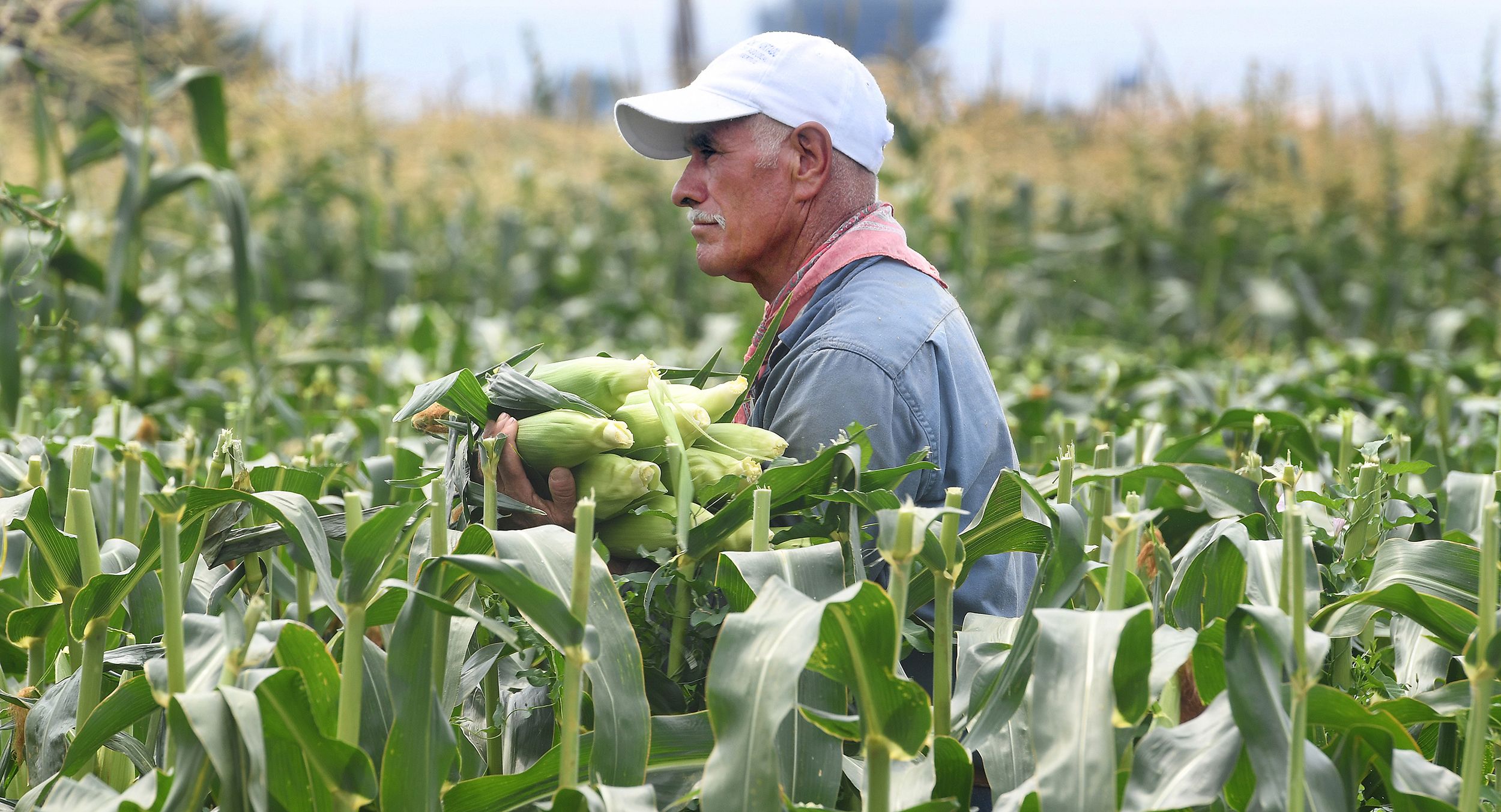
Work would not always be sweet for Harold. Like all farmers, he would pray for rain and snow to fill water reserves and hope against fire, freeze and infestation, all while navigating the whims of the economy and an immigrant workforce.
He shrugged when we met him, as he was approaching 80.
“Just a way of life,” he said.
As it is for growers of Colorado’s beloved pepper. The Pueblo green chile is also known as “Mirasol,” meaning “facing the sun.” Other chiles, including New Mexico’s rival Hatch chile, face down from the stem.
The bordering state’s chile has the benefit of history. While the Pueblo green chile we know today only gained prominence in the early 2000s, “New Mexico started marketing chiles 100 years ago,” Gary DiTomaso of DiTomaso Farms said in a previous interview.
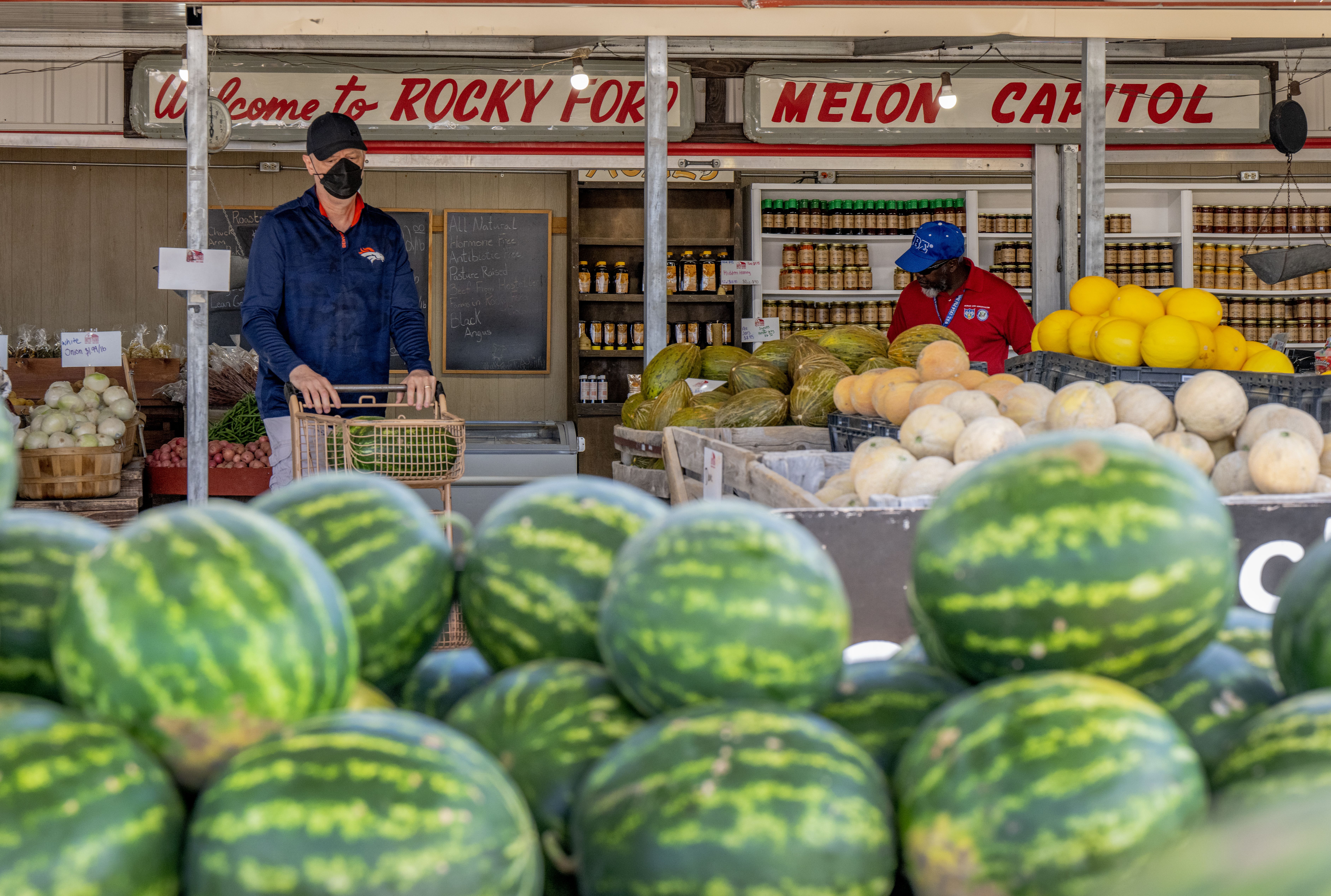
But we Coloradans know the better pepper, lining Pueblo’s roaster-filled streets as we do every September for the Chile & Frijoles Festival. And we might take a detour east ー straight to the source of our favorite cantaloupe and watermelon.
Rocky Ford is the “Sweet Melon Capital” that George Washington Swink launched during the 1870s. Fittingly, along with the fields of melons, he established a bustling sugar factory.
“The typical non-Rocky Ford cantaloupe will average a sugar content of 10% or less,” according to advertisements from back in the day. “Rocky Ford cantaloupe can reach up to a sugar content of 15%, with specialty melons registering even higher!”
They are special indeed ー a fact that one top grower tries not to forget. “I’ve eaten so many over my life,” said Michael Hirakata of Hirakata Farms. “But when (they’re) gone, I really miss it.”